

Quick answer
Six days splits Iceland's Route 1 into daily legs of roughly 200 to 220 kilometres, enough to circle the island without doubling back. The road itself is free — 0 ISK — and open as a public highway 00:00–23:59 every day of the week. Summer daylight makes those legs comfortable; winter darkness and wind can halve the usable driving day.
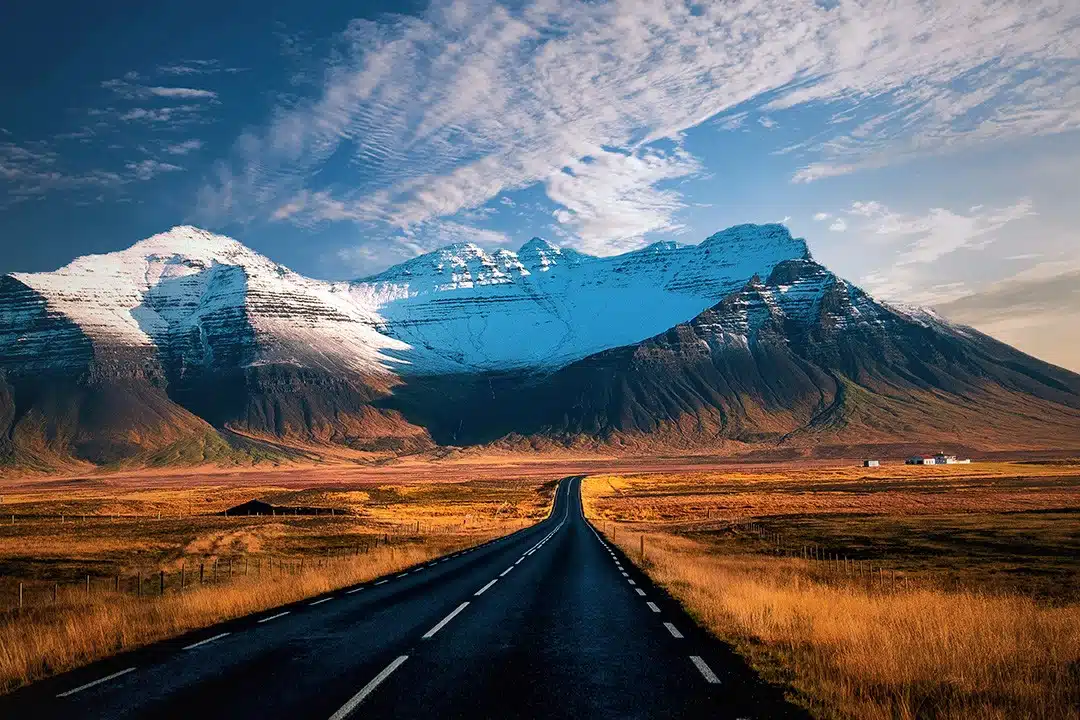
The Ring Road only became a ring in 1974. Until a bridge across the Skeiðará river closed the last gap over the black sand of Skeiðarársandur, Route 1 was a road that simply stopped. That history explains the shape of the drive today: one two-lane highway, numbered 1, tracing the island's edge for close to 1,300 kilometres, with the interior left to the gravel F-roads and their river crossings. A 6 day Iceland Ring Road itinerary is therefore less a route decision than a rhythm decision. The line is fixed. The only real variable is how far each day is allowed to stretch. Six days divides the loop into legs of roughly 200 to 220 kilometres, which is comfortable in theory and deceptive in practice. The run from Reykjavík toward Vík passes Seljalandsfoss and Skógafoss inside the first two hours. The southeast delivers Jökulsárlón and the stranded ice on Diamond Beach. The north holds Goðafoss, the Mývatn basin and the detour toward Dettifoss. None of these reads as a long stop on paper; together they are what turns a 220-kilometre day into a nine-hour one. Drivers who plan by distance alone tend to reach Höfn or Egilsstaðir after dark, having seen the road rather than the country. Conditions compress the margin further, since wind advisories, single-lane bridges and blind summits all pull the average speed down, and the national picture is published at road.is rather than left to guesswork. The practical consequence is that a six-day Iceland Route 1 road trip works best planned backwards from the overnight stops. Fixing where each night is spent — the south coast, the southeast near Höfn, the Mývatn area, then the west — puts a ceiling on daily driving and removes the temptation to bolt on Snæfellsnes or the Westfjords, both of which sit off the loop and want days of their own. The road asks little of the traveller in return: Hringvegur is a public highway, not a gated attraction with a queue at the entrance, and it stays open around the clock while daylight and weather shift with the season. What it does demand is honest arithmetic. Read the rest of this 6 day Iceland Ring Road itinerary guide for the day-by-day breakdown, the seasonal timing, the access hours and the costs that do apply along the way, before the first kilometre is driven.
“The line is fixed; the only real variable is how far each day is allowed to stretch.”
6 Day Iceland Ring Road Itinerary: A Sample Plan
This plan suits self-drivers covering the full 1,332 km loop of Route 1 counter-clockwise from Reykjavík, with roughly 3–5 hours behind the wheel most days. Six days is a working minimum: it reaches every region but leaves little slack for detours like the Westfjords or Snæfellsnes.
Reykjavík to Vík
Drive the South Coast past Seljalandsfoss, Skógafoss and Reynisfjara black sand beach, about 190 km plus stops. Allow a full day and sleep in Vík or Kirkjubæjarklaustur.
Vík to Höfn
Cross Skeiðarársandur to Skaftafell in Vatnajökull National Park, then Jökulsárlón glacier lagoon and Diamond Beach, roughly 270 km. Höfn makes the practical overnight stop.
Höfn to Egilsstaðir
Follow the East Fjords through Djúpivogur and Breiðdalsvík, about 250 km of slow coastal curves. Budget extra time; this stretch is winding and easy to underestimate.
Egilsstaðir to Mývatn
Detour to Dettifoss, then reach Lake Mývatn for Hverir geothermal field, Dimmuborgir and Grjótagjá, around 190 km. Overnight at Reykjahlíð.
Mývatn to Akureyri or Varmahlíð
Stop at Goðafoss on the way to Akureyri, optionally adding a Húsavík whale-watching trip, about 100–190 km. A shorter driving day that absorbs delays.
North Iceland to Reykjavík
The longest leg, roughly 390 km through Blönduós and Borgarnes via the Hvalfjörður tunnel. Leave early and treat the Golden Circle as a separate day, not an add-on.
Best Time for a 6 Day Iceland Ring Road Itinerary
The period from late May to early September offers the most reliable conditions for a six-day Ring Road journey, balancing extended daylight with improved road accessibility. During these months, the circuit is most navigable, allowing for the consistent travel speeds required to complete the full route in under a week.
Late May to August
HighMild, 8°C to 15°C. Long daylight hours allow for flexible driving schedules.
September and October
ModerateUnpredictable, 2°C to 10°C. Increasing wind and potential for early season snow at higher elevations.
November to April
LowCold, -5°C to 5°C. Short daylight and frequent winter storms often require road closures and itinerary adjustments.
Verdict: Late June to August provides the highest probability of completing the full 828-mile circuit without weather-related delays.
Getting There for Your 6 Day Iceland Ring Road Itinerary
The Ring Road, officially known as Route 1, is a public highway that encircles the island of Iceland. The most efficient approach is to secure a rental vehicle at Keflavík International Airport before beginning the loop.
Route 1 via Reykjanesbraut (41)
Airport Direct or Flybus to Reykjavík BSI
Rental pick-up at Keflavík Airport
Opening Hours for 6 Day Iceland Ring Road Itinerary
The Iceland Ring Road is a public highway that remains accessible 24 hours a day, throughout the entire week.
| Monday | 00:00–23:59 | |
|---|---|---|
| Tuesday | 00:00–23:59 | |
| Wednesday | 00:00–23:59 | |
| Thursday | 00:00–23:59 | |
| Friday | 00:00–23:59 | |
| Saturday | 00:00–23:59 | |
| Sunday | 00:00–23:59 |
Pricing and Fees for 6 Day Iceland Ring Road Itinerary
The Ring Road (Route 1) is a public highway with no toll for general access. Costs for your journey are determined by incidental fees such as tunnel tolls, parking at specific attractions, and vehicle fuel requirements.
A typical adult pays 0 ISK for road access, though total costs change based on parking fees and tunnel usage.
Pre-Visit Checklist for 6 Day Iceland Ring Road Itinerary
A few bookings and checks in the weeks before departure keep a six-day Ring Road loop running smoothly once you're on Route 1.
-
Reserve rental car with gravel protection — Standard insurance often excludes gravel and sand damage common on side roads.
-
Book accommodation along the loop early — Guesthouses in the East Fjords and Mývatn fill months ahead in summer.
-
Confirm your driving licence is accepted — Non-EU licences may need an International Driving Permit alongside the original.
-
Reserve highland or glacier tours in advance — Guided activities from Skaftafell and Jökulsárlón have limited daily capacity.
-
Download offline maps and safetravel.is — Mobile coverage drops in the East Fjords and on mountain passes.
-
Pack waterproof shell, layers, and boots — Wind and rain arrive without warning even on clear mornings.
-
Check road.is and vedur.is each morning — Closures and wind warnings change daily on Route 1 and its feeder roads.
-
Carry a card with PIN plus fuel key — Unstaffed pumps in rural Iceland require a PIN-enabled card or prepaid fuel key.
Check availability
Common Questions About the 6 Day Iceland Ring Road Itinerary
Everything you need to know about 6 day iceland ring road itinerary